Build a Powerful Alumni Networks with the DERF Theory
Discover how the DERF Theory helps create a powerful alumni networks through effective engagement and lasting relationships.

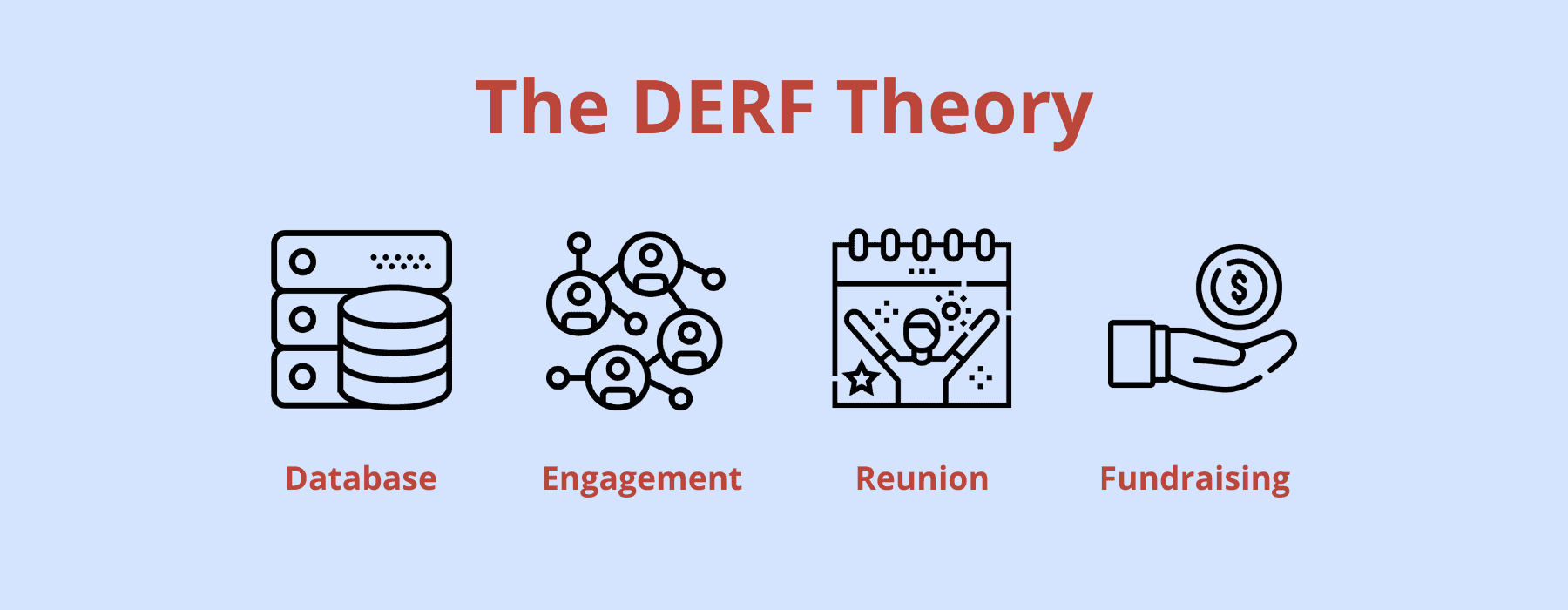
DERF Theory stands for Database, Engagement, Reunion, and Funds. It is a four-part framework that gives institutions a clear way to build powerful alumni networks, not by running one-off events or sending occasional emails, but by strengthening four connected areas that each make the others work better.
Most alumni offices want the same thing: a community of graduates who stay involved, show up, and support the institution when it counts. But building that kind of community takes more than a reunion dinner once a year or a fundraising mailer every December. It takes a structure. That is what DERF gives you.
Alumni offices everywhere are doing more with smaller teams and tighter budgets. The ones that get real results are not necessarily the ones with the biggest resources. They are the ones that work in an organised way across these four areas.
Alumni networks contribute up to 30% of a university’s total fundraising revenue. Most institutions are not close to that number because they treat alumni relations as an afterthought rather than a priority. Getting the DERF pillars right is what changes that.
The Four Pillars of Powerful Alumni Networks
Your alumni are everywhere. Some are in the same city. Many have moved across the country or abroad. They have changed jobs, got married, switched industries. If your database has not kept up with them, your outreach has not either.
An updated alumni database is not just a spreadsheet with names. It holds current locations, working email addresses, employer names, job titles, and where alumni are active on social media. When that information is accurate, your communications reach the right people. When it is not, you send hundreds of emails and hear back from a handful.
There is also the trust issue. When an institution addresses an alumnus by their old employer or spells their name wrong, it signals that the relationship is not being maintained with care. That is a hard first impression to recover from.
What a good alumni database makes possible:
- Reaching people at their current email address rather than one they stopped using years ago
- Grouping alumni by location, batch, industry, or how recently they engaged
- Planning campaigns around what the data actually shows, not guesswork
- Making alumni feel recognised rather than like a name on a mass mailing list
Worth knowing: AlmaShines keeps alumni data current automatically as people update their profiles, so your team is not spending time chasing updates manually every quarter.
Having a clean database is one thing. Actually using it to build real relationships with alumni is another. Engagement is what bridges the two.
Alumni want to feel connected to where they came from. They want to hear what is happening at the institution, stay linked to their batchmates, and know there is something useful for them on the other side of that connection. Sharing regular updates, celebrating their achievements, and giving them ways to contribute their time and experience keeps that connection alive.
Alumni also come back to their alma mater looking for things: help with transcripts, access to the library, introductions, mentoring for their own teams, or just a familiar network they can lean on during a career change. When institutions show up in those moments, the relationship stops being one-directional.
Not every alumnus wants the same thing, though. Some care about networking. Others want recognition. Some will volunteer, donate, or mentor without being asked. And some need a gentler nudge back in. Knowing which type you are dealing with before you reach out makes a real difference to how people respond.
Things that help build engagement that actually sticks:
- Newsletters with content alumni find genuinely useful, not just institution news
- Networking events matched to specific industries or graduation years
- Mentorship programs with a clear structure so alumni know exactly what they are signing up for
- Online spaces where alumni can find each other, share opportunities, and stay in touch
- Spotlighting alumni achievements publicly so they feel seen by the community
Quick tip: Alumni respond far better to outreach that matches their interests and motivations than to mass communications. The effort of getting the message right for each group pays off in participation rates that mass emails never deliver.
There is something that happens when an alumnus walks back onto campus or sits down with batchmates they have not seen in a decade. No email, no WhatsApp message, no LinkedIn post recreates it. Reunions bring people back to a place and a time that shaped them, and that feeling strengthens their connection to the institution in a way that lasts.
There are many kinds of alumni meets worth organising: Golden Jubilee celebrations, annual homecomings, weekend gatherings, reunion dinners for specific batches. Each one creates a personal moment that carries weight well beyond the event itself.
Reunions also do something useful professionally. They give alumni a chance to reconnect with people who are now spread across different industries and seniority levels. The professional network that grows out of a well-run reunion benefits both the alumni and the institution through introductions, partnerships, and referrals that continue long after the evening ends.
Why reunions matter for building powerful alumni networks:
- They create emotional moments that keep alumni connected in a lasting way
- They give alumni a reason to travel back and re-engage with the campus
- They generate genuine conversations about giving, mentoring, and staying involved
- They produce content and shared moments alumni talk about and share on their own
Alumni care about where they came from. When they see their institution doing well, growing, expanding what it offers, they want to be part of that. The support they give, whether through donations, scholarships, or campaign participation, comes from a real place when the relationship has been built properly.
Fundraising that comes after genuine engagement works. Fundraising that is the only time an institution reaches out to alumni tends to feel transactional, and alumni treat it accordingly. The institutions that see the best participation in giving campaigns are the ones that have been showing up for their alumni community throughout the year, not just in October when the annual appeal goes out.
What good engagement does for fundraising:
- Alumni who feel connected give more and give more regularly
- They bring in people from their own networks rather than needing to be asked twice
- They participate in non-monetary ways too, through time, introductions, and mentoring
- They trust that their contribution will be used well, which makes the ask much easier
Worth knowing: AlmaShines tracks engagement across every touchpoint so institutions can identify which alumni are most likely to respond before a giving campaign goes live, making outreach more focused and the results more predictable.
How the Four Pillars Connect
DERF works because the four parts feed into each other. A clean database makes it possible to engage people well. Good engagement brings alumni to reunions. Reunions deepen the relationship. Deep relationships make people want to support the institution financially. Pull one out and the others lose some of their strength too.
Institutions that work on all four areas end up with alumni communities that are genuinely engaged, not just on a mailing list. The alumni give, they show up, they bring their networks, and they talk about their institution in a way that attracts the next generation of students. That is what powerful alumni networks actually look like when they are working.
Build a Powerful Alumni Network With AlmaShines
AlmaShines brings all four DERF pillars into one platform: live alumni database, engagement tools, event management, and fundraising support built specifically for alumni relations teams.
Book a Free Demo
Frequently Asked Questions (FAQs)
DERF stands for Database, Engagement, Reunion, and Funds. It is a four-part framework that helps institutions build powerful alumni networks in a structured way. The four parts are connected: a good database makes engagement easier, good engagement brings alumni to reunions, and genuine relationships make fundraising campaigns actually work.
A wrong email address or an outdated job title means your message goes nowhere. Institutions often put a lot of effort into campaigns that fail simply because the data behind them is stale. Keeping alumni records current is what makes everything else reach the right people. AlmaShines keeps alumni data fresh automatically so the team is not chasing updates manually every quarter.
No email campaign recreates the feeling of walking back into your college or sitting across from a batchmate you have not seen in years. Reunions create that personal moment and the connection it builds tends to stick. Alumni who attend reunions are more likely to stay involved, respond to future outreach, and participate in giving campaigns in the months that follow.
Alumni who feel looked after by their institution give willingly. The ones who only hear from their alma mater when a donation drive is running tend to ignore it. Building the relationship first, through regular engagement and meaningful reunions, is what makes fundraising campaigns land. AlmaShines helps institutions track engagement so they know which alumni are most likely to respond before a campaign goes out.




Let’s discuss the idea
Join hundreds of companies transforming their corporate communities with Almashines