K–12 Education in India: 2026 Trends School Leaders Must Know
K–12 education in India is evolving fast. Explore key 2026 trends, technology shifts, and strategies school leaders need to stay competitive .


In 2026, Indian schools are navigating rapid shifts in parent expectations, alumni influence, competitive admissions, and digital-first behaviour. School leaders are dealing with a landscape where enrollment pressure, fee sensitivity, alumni-driven trust, and online reputation all intersect.
The K–12 space in India is no longer slow-moving it’s evolving at a speed schools have never experienced before. What once used to be a straightforward process of “getting the child into a good school” has now turned into a crowded, highly informed marketplace shaped by data-aware parents, expanding technology use, and the reforms introduced by NEP 2020.
Today, success for any school leader depends on how quickly and transparently they recognize these new patterns and respond to them. This article explores how Indian education is transforming and brings forward practical, evidence-backed insights that can help schools strengthen their relevance, credibility, and competitiveness in 2026 and beyond.
How Parents Evaluate Schools When Options Are Abundant
Now that families with 15-30 schools better accessible in Indian cities, the choice can no longer be about school seniority or the most prestigious school. Rather, parents will narrow down to the clarity of what students will learn actually in the school, the openness of fees in comparison to the value required and the sustainability of the school to support families beyond the admission cycle.
Today, alumni impact has become an important differentiator too: parents are more likely to rely on the experience of the former students than any brochure or marketing message. When schools engage the voice of alumni, present their stories, and bring them into the life of the community, they will build a greater sense of credibility and a long-range effectiveness.
With this level of competition, schools cannot just sit on their laurels and give the impression that they are not similar to other schools but they need to demonstrate their uniqueness. Narratives based on evidence, clearer pedagogical explanation, teams of alumni heads, and direct evidence of student outcomes will always build a lot more credibility than slogans will ever do.
One of the possible solutions is an annual Value Audit which will map the school provision, outcomes it is producing and current parental expectations. With these insights, and actual stories of alumni, you can then update your own web site, your prospectus and even your social media with facts and not assertions.
How Digitally Native Parents Research Schools ?
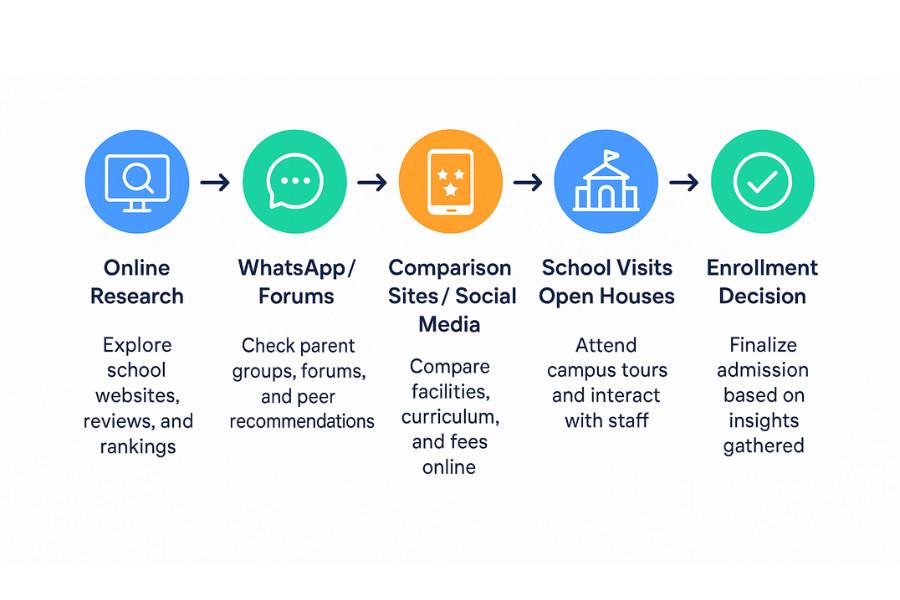
Digitally native parents search schools on the internet; they inform on the websites of schools and on social media and various online platforms and pay attention to the digital offerings of a school, such as online portals and digital integration. They seek schools that meet their tech-savviness, including good communication systems like WhatsApp, and schools that supply edited material on the use of technology and online safety. Other parents might also seek out former students in an informal manner to get an idea of the school life.
Research methods
Online and internet channels: These are digital parents who are at ease with the online tools and usually begin their search online. They look through web pages and compare schools online, reviewing and asking the community questions on the social media.
Technological oriented curriculum: They also seek to find information about a school in terms of its digital features, including the application of AI and educational applications, and the application of technology in the classroom.
Communication preferences at the school level: They have certain preferences regarding the mode of communication in schools, thus preferring such mediums as WhatsApp or parent portals to the conventional ones.
Digital literacy and safety: They have interests in digital citizenship and safety, and hence they investigate the topic of the teaching of digital literacy and critical assessment of information on the Internet in schools.
How Schools Can Turn NEP 2020 Into Real Classroom Practice
NEP 2020 is the biggest force changing K–12 in India. It pushes toward:
- Hands-on, project-based learning
- Competence-based teaching
- interdisciplinary work
- flexible curriculums
- less focus on memorization
Parents want more from schools than just mentioning NEP; they want it implemented.
Schools that incorporate the ideas of NEP therein derive a clear credibility edge in:
- semester-based evaluations
- AI-assisted learning tools
- early coding and computational thinking
- Vocational and life-skills modules from middle grades
- ongoing teacher training
Suggestion:
Hold regular “NEP Parent Orientation Sessions” to demonstrate how you are using NEP in the classroom. It offers clarity and also is a demonstration of leadership.
Why Technology Is Now a Core Driver in K–12 Schools
In 2026, technology is essential in Indian K–12 schools. Adaptive learning platforms, digital portfolios, AR/VR labs, and data-driven assessments allow teachers to personalize lessons, monitor progress in real time, and deliver skill-focused, engaging learning experiences. Parents evaluate schools based on how effectively technology enhances learning and prepares students for future challenges.
Top schools go further by linking technology to tangible outcomes through a structured alumni ecosystem. Alumni achievements demonstrate that classroom learning translates into real-world skills, reinforcing credibility and trust with prospective families. Technology combined with alumni insight is a strategic differentiator, critical for schools that want to lead in a competitive landscape.
How School Reputation Is Built (or Broken) in Real Time
The reputation of a school is formed daily not only by the ranking of end-year results or tradition. The perception of parents is increased through digital platforms: WhatsApp, social media, and Google reviews, yet the most effective is exerted by alumni. Experiences, accomplishments, and recommendations of former pupils are credible and no directive or advertisement can outdo them, which silently influence parent confidence and faith in the school.
Schools will need to be transparent and consistent in order to have a good reputation. The credibility is assured by continuous monitoring of the feedback, responding quickly to the issues, and emphasizing the successes of alumni and present-day student achievements. In the modern interconnected world, the voice of alumni is a resource, and it can be used to establish a long-term credibility or, conversely, undermine the reputation of a school in society.
Why School Admissions Have Become a Year-Round Journey
In today’s competitive education landscape, parents begin shortlisting schools 8–10 months before the official admissions season. Admissions is no longer a brief, high-pressure sprint—it has evolved into a year-long journey, where families continuously evaluate schools, compare programs, and seek reassurance about the right choice for their child. Alumni experiences and success stories often play a subtle but powerful role in this process, providing real-world evidence of the school’s impact and influencing parent perception.
Schools that maintain consistent visibility, transparent communication, and authentic engagement throughout the year naturally remain top of mind. Beyond application windows, ongoing touchpoints—including newsletters, social media highlights, and short video reels of classroom, extracurricular life, and alumni achievements—build familiarity, trust, and confidence among prospective families. By integrating alumni narratives into these touchpoints, schools reinforce credibility, demonstrating that the learning experience extends beyond the classroom and continues to yield results over time.
Leading Schools Focus on Credibility, Not Campaigns
The one common strength among top-performing schools in 2026 is strong credibility. They actually demonstrate work done, invest in teachers, and communicate frequently, not just during admissions. They focus on value more than vanity.
Credibility comes from:
- clear, honest communication
- measurable learning results
- strong teacher quality
- Authentic Digital Storytelling
- responsive parent relationships
- visible NEP-based innovation
- Alumni outcomes and shared success stories that validate the school’s long-term impact
Schools that build their strategy on credibility will not just stand out; they will thrive.
Conclusion
Indian K-12 education is in a very dynamic but difficult stage. The increasing parental demands, influence of the digital, and the fast growth of schools are changing the way the leaders have to work, communicate, and create value.
The following are the hub keys to 2026: Credibility. Transparency. Adaptability. Engagement.
Schools that combine such principles within themselves, but simultaneously use the experience and achievements of their former graduates to strengthen faith will be in the most advantageous positions to flourish. Principals who integrate prudent planning in the areas of academics, technology, parental involvement, and alumni relations will move with ease and command in a landscape of escalating options and escalating demands.





Let’s discuss the idea
Join hundreds of companies transforming their corporate communities with Almashines