10 Key EdTech future Trends Shaping Education in 2026
Uncover future-driven IoT education technology trends shaping 2026, powered by AI, career-focused digital ecosystems, etc.

Did you ever wonder if the education system we have now really teaches students the best that it can? Will it matter in 5 or 10 years?
The future of education is no longer digital-first, it is intelligent, connected, and deeply personalized.
Based on 2025–2026 industry reports, education technology is rapidly evolving toward AI-powered personalization, immersive virtual experiences, smart campus infrastructure, and secure digital ecosystems. Institutions are moving beyond basic online learning and building data-driven, career-aligned systems that improve engagement, retention, and employability.
The global EdTech market continues to expand significantly, driven by demand for flexibility, accessibility, and scalable innovation. According to industry analyses from organizations such as World Economic Forum and UNESCO, the next phase of education will be defined by intelligent automation, lifelong learning ecosystems, and inclusive digital access.
Introduction
The global EdTech market is growing at a remarkable pace. Valued at $220.5 billion in 2023, it is projected to surge to $810.3 billion by 2033, fueled by rising demand for flexible, accessible, and personalized learning experiences. Similarly, the smart education market is expected to reach $680.1 billion by 2027, reflecting a strong global shift toward technology-driven learning solutions.

Consider a student in a village in India learning alongside an Ivy League university graduate using an alumni network, this is no longer a dream, but the new reality enabled by education technology.
EdTech in 2026 is a significant shift not only in technology but in the way that people teach, learn, and interact with one another. The largest shift is about people: the potential of technology to serve learners, foster community, and make opportunities accessible to all.
10 Key Trends That Will Shape the Education Future
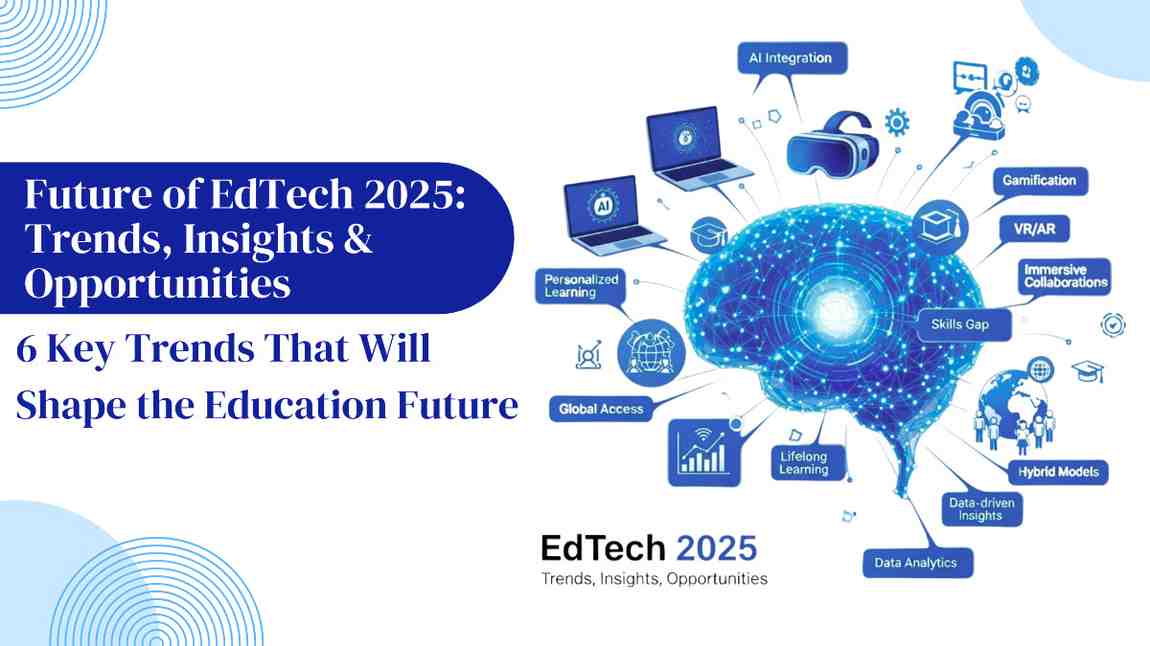
As we step deeper into a digitally connected era, education is no longer confined to classrooms or static syllabi. The future of learning will be defined by flexibility, personalization, and connectivity. These six trends will significantly shape how learners, educators, and institutions evolve in 2026 and beyond:
1. Use of AI and Automation
Machine learning and AI are helping create personalized learning experiences. By looking at each learner’s interaction, sites are now able to provide content that addresses their specific needs, which enhances engagement and retention.
According to Forbes, 60% of educators already use AI in education, like classroom daily, a number that’s expected to grow.
2. Hybrid Learning Models
Blended learning is the new norm, not add-on. Combining online and on-campus instruction offers greater flexibility, access, and tailoring in education and workplace training.
Hybrid education is no longer a pandemic response, it is a permanent model.
Modern hybrid ecosystems combine:
- In-person instruction
- Live virtual classrooms
- On-demand recorded sessions
- Asynchronous collaboration tools
This flexibility supports working professionals, international students, and lifelong learners.
3. Micro-learning and Credentialing
Bite-sized learning and micro credentials are revolutionizing the process of upskilling. Students and employers are increasingly recognizing stackable, flexible certification that addresses actual needs.
Short, skill-based certifications are rapidly growing in demand.
Micro-credentials offer:
- Faster upskilling
- Industry-relevant skills
- Modular, stackable pathways
- Career-focused outcomes
Blockchain-backed digital credentials ensure secure, verifiable academic records and reduce credential fraud.
This aligns education more closely with employment markets.
4. Immersive Learning Using AR/VR
AR and VR are no longer only for gaming they’re transforming classrooms. They enable students to learn about the human body, visit ancient cities, or perform physics experiments, rendering difficult subjects more interactive and easy to comprehend.
Augmented Reality (AR) and Virtual Reality (VR) are redefining experiential learning.
Students can:
- Explore historical civilizations
- Conduct complex science simulations
- Practice medical procedures in safe virtual labs
- Engage in immersive collaborative environments
Virtual campuses and digital twins are emerging as part of an educational “metaverse” extending classrooms beyond physical walls.
Immersive technology increases comprehension and long-term retention.
5. Internet of Things (IoT) in Smart Campuses
The Internet of Things (IoT) is creating connected educational ecosystems.
IoT-enabled campuses now include:
- Smart attendance tracking via RFID
- Connected lab equipment sending real-time data
- Smart boards integrated with student devices
- Environmental sensors optimizing classroom comfort
- Intelligent campus security systems
IoT transforms campuses into responsive, data-aware ecosystems.
6. Collaborative Learning & Rise of Educational Communities
Content delivery is no longer sufficient. Successful learning today relies on interacting with peers, mentors, and institutions. This network allows individuals to be more engaged and feel supported.
Various ed-tech community engagement platform help in this. They enable schools to create vibrant alumni communities, foster collaboration in the external world, and facilitate lifelong learning beyond the classroom.
7. Data-Driven Learning & Predictive Analytics
Learning analytics and big data allow institutions to:
- Identify at-risk students early
- Predict academic outcomes
- Improve curriculum design
- Personalize intervention strategies
Data is now central to student success strategies.
8. 5G-Enabled High-Speed Learning Infrastructure
5G connectivity is enhancing:
- Real-time video streaming
- Low-latency AR/VR experiences
- Cloud-based collaboration
- Remote laboratory simulations
For rural and underserved regions, high-speed connectivity bridges accessibility gaps and supports digital inclusion initiatives.
9. Cybersecurity, Ethical AI & Digital Trust
As digital adoption grows, so do security risks.
Institutions are investing in:
- Zero-trust security frameworks
- AI-powered threat detection
- Encrypted student data systems
- Ethical AI governance policies
Building digital trust is essential to sustaining EdTech growth.
Security and ethics are no longer back-end considerations they are strategic priorities.
10. AI Tutors & 24/7 Intelligent Chatbots
AI tutoring systems provide:
- Instant feedback
- Personalized explanations
- Round-the-clock support
These intelligent assistants bridge learning gaps, especially in hybrid and online environments where faculty access may be limited.
The result? Higher retention and improved student confidence.
How Technology Enhances Learning Communities
- Collaboration Tools: Virtual spaces, group messaging, and video calling allow collaboration and teamwork.
- Inclusive Design: Multilingual capabilities and accessibility features provide equal participation geographically and across learning styles.
- Alumni Networks: Industry connections and mentors provide learners with credibility, currency, and long-term value.
Security, Ethics, and Digital Access
As EdTech expands, its role expands as well:
- Cybersecurity: Encrypted systems and transparent data handling are non-negotiables.
- Ethical AI: Algorithms should be fair, inclusive, and equitable.
- Digital Inclusion: Governments and institutions must provide subsidies on equipment and broadband internet access in public spaces to bridge the digital divide.
Challenges and Opportunities: A 360° Snapshot
| Strengths | Challenges | Opportunities |
|---|---|---|
| Artificial intelligence-based individualized learning | Unequal digital resource access | Low-cost, scalable EdTech solutions |
| Employing AR/VR and gaming | Limited training for teachers | Teacher training initiatives |
| Microcredentials and flexible pathways | Screen burnout and fatigue | Wellness-focused balanced hybrid curriculum |
| Community-based learning | Ethics and data protection issues | Student-centered, moderated, secure online spaces |
Conclusion: A Future Based on Connection
EdTech 2026 is not just about smart tools it’s about better systems in which students belong to a community. With tailored learning paths, classes that use augmented reality, and mentorship from former students, the future of education is personal, welcoming, and highly human. The real innovation is not only in algorithms; it is also in how technology keeps us connected.
Frequently Asked Questions (FAQs)
Alumni networks provide mentorship, career guidance, internship referrals, and real-world insights. They help students navigate academic and professional challenges in both online and hybrid learning environments.
Yes. Alumni often share job opportunities, conduct mock interviews, and recommend students within their organizations. This direct industry connection improves placement outcomes and career readiness.
Institutions can encourage participation through virtual events, mentoring programs, recognition initiatives, and dedicated community platforms that make engagement simple and meaningful.
Alumni contribute by sharing industry trends, hosting skill workshops, and supporting continuous learning programs. Their experience helps keep academic content relevant and practical.
Digital alumni engagement strengthens institutional reputation, improves placement records, increases donor support, and builds long-term relationships that benefit both current students and graduates.





Let’s discuss the idea
Join hundreds of companies transforming their corporate communities with Almashines