How Modern School Alumni Management Boost Engagement
Unlock alumni potential with modern management systems that boost engagement and streamline school operations .


Imagine this: a parent calls your school asking for stories of alumni success. The admissions team scrambles, administration sifts through spreadsheets, and alumni records are scattered across emails and outdated databases. Hours are spent chasing information that already exists—but no one can find it quickly.
Did you know that mid-sized schools can lose up to 30% of staff time every week to repetitive tasks caused by disconnected systems? From updating alumni lists to coordinating events, these hidden inefficiencies quietly erode productivity and limit meaningful alumni engagement.
The problem isn’t staff. It’s the systems.
Why Schools Are Behind on Disconnected Systems
See Why Schools Are Behind on Disconnected Systems
Suppose this situation: Admissions has to confirm alumni participation in order to present success stories to potential parents. Administration requires the same information on the events, donation, or reporting. In the meantime, alumni databases are all over spreadsheets, email, and outdated databases.
The result?
- Staff spend hours pursuing information that already exists.
- Reports remain incomplete.
- Follow-ups take longer than they should.
- Schools lose chances for meaningful alumni engagement.
Middle-level school audits carried out by internal auditors indicate that fragmented workflows can occupy up to 30 percent of personnel time. This is time spent on repetitive work instead of meaningful or strategic planning. Over an academic year, these inefficiencies accumulate to hundreds of hours lost, quietly eroding productivity.
The Game Changer in Alumni Management Systems
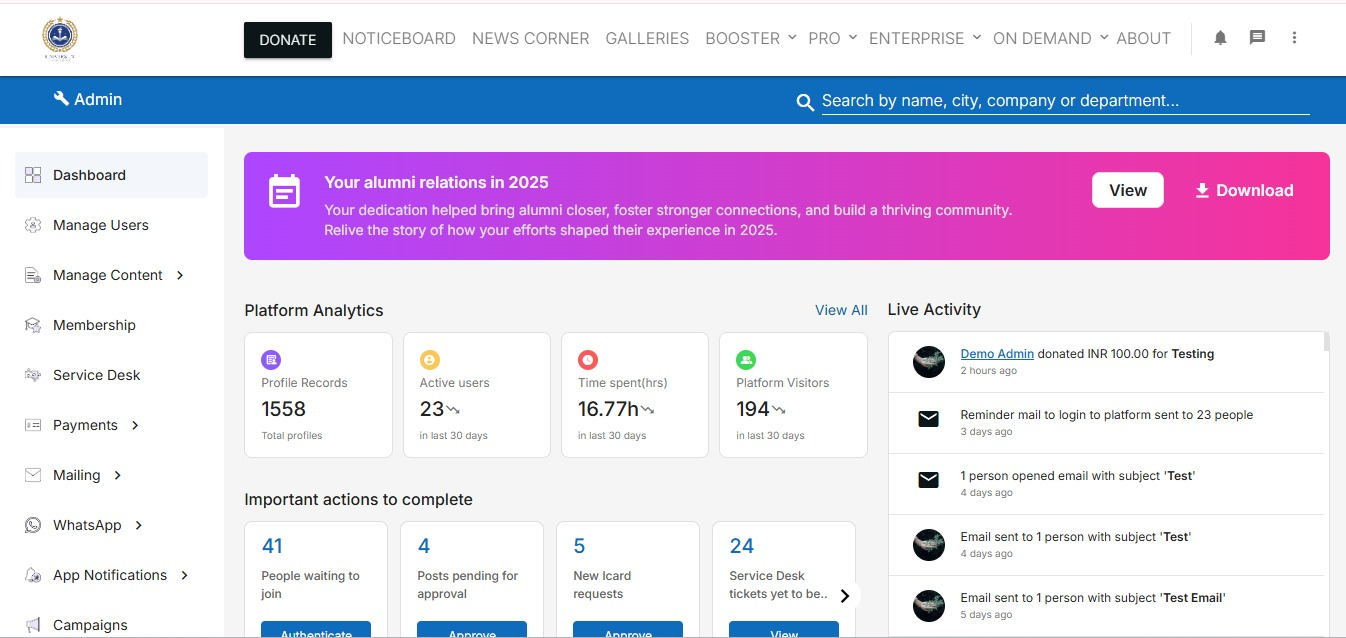
Modern alumni management tools are designed to bridge interdepartmental links. They store alumni records centrally, monitor engagement history, and make insights accessible to all who require them.
Some key benefits include:
- Single Data Availability: Admissions, administration, and alumni teams access the same up-to-date information without duplicating effort.
- Effective Communications: Schools can reach alumni for events, mentorship programs, or fundraising without manual tracking.
- Intelligent Reporting: Leadership can gauge alumni activity, engage active contributors, and design initiatives based on accurate data.
With a single source of truth, schools not only save time but also enhance relationships with alumni, turning passive records into active contributors.
Actual Effect on School Workings
An example: A mid-sized urban school introduced an integrated alumni system. Within six months:
- Employees reported a 20 percent reduction in hours devoted to mundane administrative functions.
- Alumni participation in mentorship programs and fundraising doubled.
- Admissions teams could present real-life alumni success stories, building trust and credibility.
These results were achieved without adding staff or increasing workload, but by using smarter systems and better visibility.
Developing a Culture of Engagement
Efficiency is not the only advantage of an alumni management system. When alumni data is accessible and actionable:
- Schools can strategically plan activities, involving the right alumni in the right programs.
- Alumni feel closer to the institution, knowing their efforts and achievements are recognized.
- Leadership gains clear insights into institutional impact, enabling data-driven decisions.
In short, an alumni management system does more than store information it builds a culture of alumni involvement in school development.
Starting Small, Thinking Big
Implementing a new system can feel intimidating. Transformation doesn’t have to happen overnight. Successful schools usually start by:
- Consolidating core alumni data — contact details, graduation year, 360-degree interaction history.
- Integrating departments — all teams (admissions, administration, alumni) use the same platform.
- Measuring engagement — tracking participation rates, mentoring, and event contributions.
Small steps lead to measurable outcomes. Within months, staff spend less time chasing information, alumni participation rises, and leadership can make informed, strategic decisions.
The Next Step
Disconnected workflows silently hold schools back. By adopting a modern alumni management system, schools don’t just fix inefficiencies they unlock the hidden potential of their alumni network. When alumni become visible and engaged, every initiative gains momentum, every decision is data-driven, and the school community grows stronger together.
Frequently Asked Questions (FAQs)
The four pillars of alumni engagement include Communication, Involvement, Recognition, and Advocacy. Together, they build long-term relationships and foster meaningful alumni participation in school initiatives.
An alumni management system is a digital platform that centralizes alumni data, tracks engagement, and facilitates communication, making it easier for schools to involve alumni in events, mentorship, and fundraising programs.
Alumni engagement refers to the interaction between a school and its former students, including participation in events, mentoring, networking, giving feedback, and supporting the school’s programs and initiatives.
Initiatives for alumni engagement include mentorship programs, networking events, reunions, fundraising campaigns, newsletters, volunteer opportunities, and recognition programs that celebrate alumni achievements.






Let’s discuss the idea
Join hundreds of companies transforming their corporate communities with Almashines