10+ Best Association Management Software (AMS) Platforms in 2026: Complete Buyer’s Guide
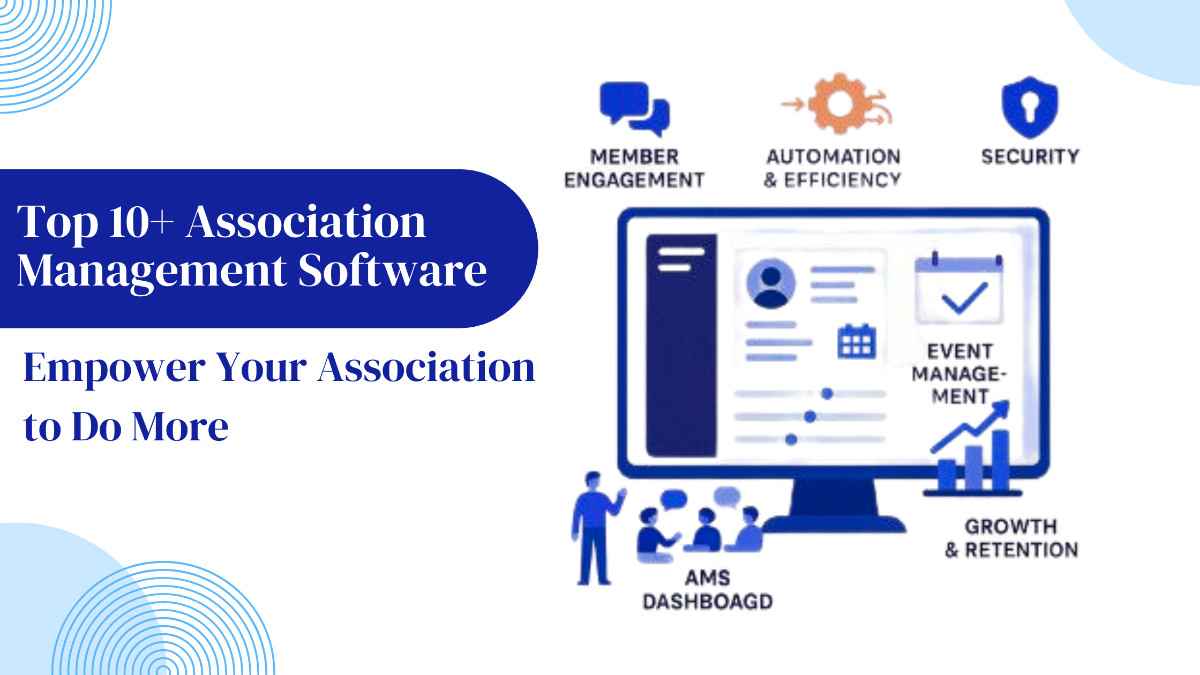
Association management software (AMS) helps membership-based organizations manage members, automate dues and renewals, run events, and improve engagement from one connected platform. The best AMS platforms in 2026 are AlmaShines, Wild Apricot, GrowthZone, iMIS, MemberClicks, Aptify, Raklet, Novi AMS, Glue Up, and Tendenci.
Choosing the right one depends on your organization size, budget, and what you need it to do. This guide covers what an AMS is, how it differs from a CRM, what features to look for, how AI is changing membership management, pricing models, and a side-by-side table of 10 platforms to help you make a confident decision.
Global AMS market projected for 2026, up from $2.61B in 2025
Of associations have invested or plan to invest in AMS software this year
Of associations struggle to connect their engagement tools effectively
Sources: iMIS 2026 AMS Industry Report; Sequence Consulting 2026 Association Trends Report
What Is Association Management Software?
Association management software is a platform built specifically for membership organizations. It replaces the disconnected combination of spreadsheets, email tools, and payment processors that most teams use before adopting a dedicated system.
At its core, an AMS provides a centralized member database, automated dues and renewal billing, event registration, email communication, a member self-service portal, and reporting dashboards. More advanced platforms add chapter management, certification tracking, fundraising tools, job boards, and AI-powered analytics.
The organizations that benefit most include professional and trade associations, alumni networks, educational institutions, chambers of commerce, nonprofits, clubs, unions, and foundations. Any organization that manages ongoing membership relationships at scale will find a purpose-built AMS significantly more effective than general-purpose tools.
AMS vs CRM: What Is the Difference?
Both systems manage data about people and organizations, but they are built for entirely different jobs. Choosing the wrong one means expensive customization and ongoing workarounds.
Association Management System (AMS)
- Built for ongoing membership relationships
- Manages dues, renewals, and member portals natively
- Handles event registration and chapter management
- Tracks certifications and continuing education
- Supports member engagement scoring
- Purpose-built for associations, nonprofits, and alumni offices
Customer Relationship Management (CRM)
- Built for sales pipelines and lead conversion
- Manages prospects, deals, and revenue stages
- Optimized for customer acquisition workflows
- General-purpose across industries
- Requires expensive customization for membership use
- Does not handle dues or member portals natively
For most associations, an AMS is the right choice. A CRM only adds value if your organization runs large-scale corporate sponsorship or training sales alongside its membership program and is already deeply embedded in a platform like Salesforce.
9 Core Features to Evaluate Before Choosing an AMS
Most platforms claim to offer all of these. The real question is how well each is implemented and whether it matches your actual workflows. Define your requirements before entering any demo.
Member Database
Centralized records with profile fields, engagement history, and segment tagging. Every other feature depends on this being accurate and searchable.
Dues and Renewal Automation
Automated billing cycles, renewal reminders, and lapse workflows that reduce manual follow-up and protect member retention.
Event Management
End-to-end planning with registration, ticketing, attendee management, and post-event reporting in one workflow.
Member Self-Service Portal
A member-facing portal for profile updates, event registration, dues payment, and resource access without staff involvement.
Email and Communication
Targeted campaigns and automated sequences segmented by member type, behavior, or engagement level without exporting to a separate tool.
Reporting and Analytics
Dashboards tracking membership growth, renewal rates, event performance, revenue, and engagement updated in real time.
Integrations
Native connections to QuickBooks, Salesforce, Mailchimp, Zoom, and Zapier that keep your systems in sync without manual data transfer.
Payment Processing
Secure online payments for dues, events, and merchandise. Ask vendors directly whether they charge transaction fees on top of the subscription.
Mobile Access
A native mobile app for members and a mobile-optimized admin interface for staff managing events and communications away from a desk.
How AI Is Changing Association Management in 2026
Artificial intelligence has shifted from a marketing talking point to a practical operational tool in leading AMS platforms. The key change is that AI is turning passive member data into active decision support.
Rather than staff manually reviewing spreadsheets to find at-risk members or segment audiences for campaigns, AI does this automatically. This gives lean association teams the capability of a much larger operation.
Member Risk Scoring
AI analyzes engagement patterns and predicts which members are likely to lapse before renewal. Staff can reach out proactively to at-risk members rather than chasing lapsed ones after the fact.
Content Recommendations
Based on each member’s event history and engagement patterns, the platform surfaces relevant resources and upcoming events automatically, without manual segmentation from staff.
Predictive Analytics
AI forecasts renewal rates, event attendance, and dues revenue based on historical patterns. This supports better budgeting and program planning with data rather than estimates.
Workflow Automation
AI generates first drafts of renewal emails and event descriptions. Workflow automation sends the right communication to the right member at the right time based on behavioral triggers.
AMS Pricing Models: What You Will Actually Pay
The headline monthly price on a vendor’s website rarely reflects your total annual spend. There are three main pricing structures, plus one commonly buried cost that significantly increases what you pay.
Per-Member Pricing
Cost scales with the number of members in your database. Growth is good for your association but increases your software bill directly.
Watch for growth penaltiesFlat-Rate Pricing
A fixed fee regardless of member count. Best for growing organizations that need predictable budgeting without cost surprises as membership increases.
Best for scaling orgsPer-Staff-User Pricing
Cost is based on administrator accounts, not member count. Keeps software costs low for small teams managing large memberships.
Common in enterprise AMSAlways request a full 3-year total cost quote from every vendor. Include the platform fee, setup cost, data migration, training, and any per-feature add-ons. Implementation costs alone can range from zero for simple platforms to $10,000 or more for enterprise deployments.
10+ Best Association Management Software Platforms for 2026
The table below covers 10 of the most widely used AMS platforms as of May 2026. Platforms are listed alphabetically. Pricing is sourced from vendor websites and verified user reviews. Contact each vendor for a current quote before making any decision.
| Platform | Starting Price | Best For | Free Trial | AI Features | Mobile App |
|---|---|---|---|---|---|
| AlmaShinesTop Pick | $100/month | All-in-one for any association | Free demo | ✗ | ✓ |
| Aptify | Contact for pricing | Mid-to-large associations | ✗ | ✗ | ✓ |
| Glue Up | $2,500/year | Global associations with AI needs | ✗ | ✓ | ✓ |
| GrowthZone | $332/month | Chambers and trade associations | ✗ | ✗ | ✓ |
| iMIS | $7,200/year | Enterprise associations (10,000+ members) | ✗ | ✓ | ✓ |
| MemberClicks | Contact for pricing | Trade and professional associations | ✗ | ✗ | ✓ |
| Novi AMS | $685/month | Accounting-focused associations | ✗ | ✗ | ✗ |
| Raklet | Free / $49/month | Online communities and clubs | ✓ | ✗ | ✓ |
| Tendenci | Free (self-hosted) | Organizations with in-house IT | ✓ | ✗ | ✗ |
| Wild Apricot | $60/month | Small nonprofits and local chapters | ✓ | ✗ | ✓ |
Looking for an all-in-one AMS for your association?
AlmaShines combines member management, events, fundraising, elections, and engagement in one platform. See it in action in a free 30-minute demo.
How to Choose an AMS: 8-Point Buyer Checklist
The associations that regret their AMS purchase chose a platform based on an impressive demo rather than a defined requirements list. Define your needs first so you evaluate platforms against your actual workflows, not the vendor’s strongest slides.
AlmaShines: All-in-One Association Management for Any Organization
AlmaShines is a complete association management platform built for nonprofits, alumni associations, educational institutions, professional membership organizations, and community groups.
It combines member management, event tools, fundraising, digital elections, engagement features, and a free directory tool in one platform. Organizations use it to manage networks ranging from a few hundred to tens of thousands of members with lean administrative teams.
Member Directory Management
Searchable, centralized member database with profile management and automatic updates via the free AlmaDirectory tool.
Secure Digital Elections
A purpose-built online voting module with verifiable, auditable results. Most general AMS platforms require a separate third-party tool for this.
Fundraising and Campaigns
Native donation and campaign management supporting one-time and recurring contributions, without third-party payment integrations.
Event Management
Full event planning with RSVPs, ticketing, virtual hosting support, and automated reminder sequences for any type of event.
Digital Member ID Card
QR-enabled digital ID cards for member verification and access to facilities, events, and exclusive benefits.
Engagement Analytics
Real-time dashboards measuring member activity, event attendance, and campaign performance to help teams prioritize outreach effectively.
CEGAANA: Campus Building Fundraise on AlmaShines
CEGAANA ran a full fundraising campaign for a new campus building using AlmaShines. The entire campaign, from outreach and donor tracking to payment processing and reporting, ran within the platform without any third-party tools.
Total contributions raised
Of campaign goal achieved
Used for the entire campaign
Frequently Asked Questions
It replaces the disconnected combination of spreadsheets, email tools, and payment processors that most teams use before adopting a dedicated platform. Organizations including professional associations, alumni networks, trade groups, nonprofits, and chambers of commerce all use AMS platforms to manage their member communities at any scale.
Shortlist two or three platforms based on your member count, annual budget, and required integrations before booking demos.
Most associations need an AMS as their core platform. A CRM only adds value if your organization runs large-scale corporate sponsorship or training sales alongside its membership program.
Always request a full 3-year cost quote including setup fees, migration, and training. Many platforms charge transaction fees of 1.5 to 3 percent on all payments processed, which can add thousands per year beyond the subscription.
In 2026, AI features like member risk scoring and predictive renewal analytics have become important differentiators. Confirm integration support for the tools your team already uses before shortlisting any platform.
When evaluating AI features, verify capabilities are live today and not on a future roadmap, and confirm member data is not used to train third-party AI models.
Large associations with complex donor pipelines or corporate sponsorship programs may benefit from running both. For the majority of organizations, a dedicated AMS delivers better membership outcomes than a CRM without the expensive customization a CRM requires for membership use cases.
AlmaShines offers AlmaDirectory, a free alumni and member database tool for organizations that want to start with directory management before adopting a full platform. For most associations, a paid plan in the $60 to $200 per month range provides significantly better support, reliability, and features.
The timeline depends on the complexity of your member data, integrations needed, and staff training requirements. Most vendors include implementation support, though some charge a separate onboarding fee.
AlmaShines also offers a free directory tool called AlmaDirectory for institutions that want to start with database management before moving to the full platform. The best choice depends on your organization size, budget, and whether engagement or fundraising is your primary goal.