What Is an Exit Interview Platform and How Does It Work

Every quarter, thousands of organizations sit down with departing employees for a final conversation. They ask the same questions, collect the same surface answers, and file the same summaries. And every quarter, the real reasons people leave stay exactly where they have always been: inside the conversation nobody read closely enough.
That is the gap an exit interview platform is built to close.
What Is an Exit Interview Platform
An exit interview platform is a tool that captures, analyzes and interprets what departing employees say during their final conversations with an organization. Unlike basic exit forms that collect a stated reason for leaving, a purpose-built platform reads the full conversation, surfaces recurring red flags and green signals across multiple exits over time, and delivers a structured sentiment report that tells leadership exactly what is driving attrition and what to do about it.
The exit interview has always been the most honest conversation an organization gets to have with an employee. By the time someone sits in that final meeting, the social filters are mostly gone. They are not managing a relationship with a manager anymore. They are not protecting a reference. In many cases, they are willing to say things they have kept to themselves for months.
The problem is not what employees say in exit interviews. The problem is how little of it organizations actually hear.
Most exit processes capture one thing: the stated reason for leaving. Better opportunity. Personal reasons. Compensation. Growth. These surface answers go into a form, the form goes into a system, and the system produces a report that tells leadership roughly what it already suspected. The real conversation, the one sitting underneath the stated reason, rarely makes it out of the room.
What sits beneath that surface reason is where the actual organizational intelligence lives. And the organizations beginning to extract it are finding something important: the exit interview has far more to say than anyone has been asking it.
The Stated Reason Is Rarely the Whole Story
When a departing employee says they are leaving for a better opportunity, that answer is almost always incomplete. Not dishonest, but incomplete. The better opportunity was compelling enough to act on precisely because something inside the current organization had already made staying feel less worthwhile.
Work Institute research analyzing over 17,000 exit interviews found that the vast majority of employee departures are preventable. The conditions that make leaving feel like the right call build slowly, often across many months, and they show up in how employees talk about their experience long before they show up as a resignation letter.
A deeper reading of an exit interview is not about asking different questions. It is about looking at everything the employee says across the whole conversation and asking something different: what was this person’s actual experience of working here, and what does it tell us about the organization?
The resignation reason is the headline. What sits beneath it, in the language employees use to describe their day-to-day experience, is the story the organization needs to read.
What a Deeper Reading of the Same Interview Reveals
When an exit conversation is read beyond its surface, the same interview that produced “better opportunity” as the leaving reason will often contain much more specific signals. A manager who became less accessible over the last quarter. A project reassigned without any explanation. A promotion conversation deferred twice and never followed up on. A team dynamic that shifted six months ago and never recovered.
None of these things show up in the stated reason for leaving. But all of them shaped it.
Research on exit interview data analysis identifies four categories of insight that exit conversations contain: descriptive (what happened), diagnostic (why it happened), predictive (what is likely to happen next), and prescriptive (what the organization should do about it). Most organizations only ever reach the first. The intelligence that actually drives retention strategy lives in the other three.
Moving from surface-level to deeper analysis is not about running longer interviews. It is about reading the same conversation differently, with a process designed to catch what a single reviewer reading a single transcript simply cannot surface at scale.
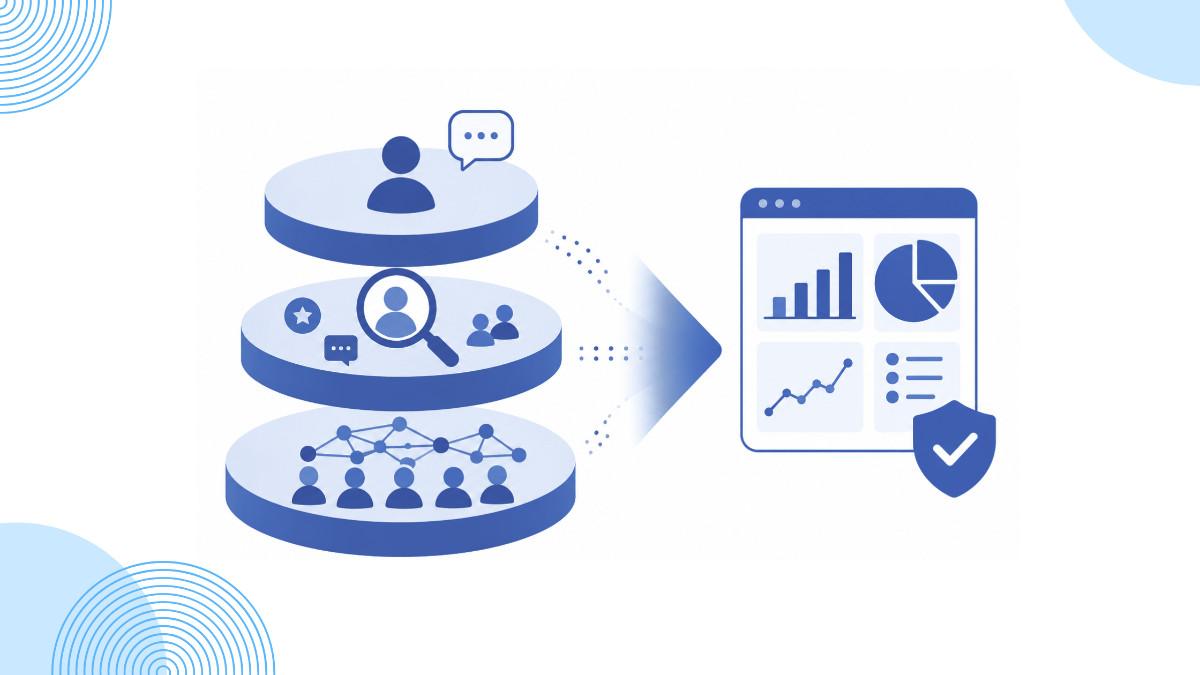
Three Layers Every Exit Conversation Contains
The Stated Layer
What the employee says directly when asked why they are leaving. This is what traditional exit processes capture. It is real, but it is the most managed and least specific layer of the conversation. It answers the surface question without revealing the conditions that made the answer possible.
The Experiential Layer
What the employee reveals when describing how their time at the organization actually felt. This layer contains the specific incidents, relationships, communication patterns, and unmet expectations that accumulated into the decision to leave. It surfaces in the details, not the headlines, and it is where the organizational signals that matter most are hiding.
The Pattern Layer
What becomes visible only when the experiential content of many interviews is read together. A single employee mentioning a specific concern is an individual experience. The same concern appearing across fifteen exits over two quarters is an organizational signal. The pattern layer is invisible to manual, individual review and requires systematic analysis across the full body of exit data to surface.
Most organizations stop at layer one. The intelligence that actually drives retention decisions lives in layers two and three. The shift from HR compliance to workforce intelligence begins precisely at this transition.
Red Flags and Green Signals: The Two Outputs That Change Decisions
When exit interviews are analyzed at depth and across multiple conversations, the patterns that emerge organize naturally into two categories. The first are risk signals, the recurring themes that indicate where organizational conditions are eroding trust, limiting growth, or creating the friction that precedes departure. The second are strength signals, the experiences employees consistently describe as reasons they stayed as long as they did, contributed as much as they did, and would recommend the organization to others.
Both categories carry equal strategic weight. Risk signals tell leadership where to intervene. Strength signals tell them what to protect, replicate, and build on across the rest of the organization.
What Drove the Departure
- Leadership accessibility declining over time
- Career growth conversations deferred or absent
- Recognition gaps for visible contributions
- Communication inconsistency from senior management
- Team trust eroding after structural changes
- Misalignment between stated culture and lived experience
What Extended the Stay
- Strong peer relationships and team dynamic
- Clear role purpose and visible contribution impact
- Manager who advocated and created visibility
- Genuine learning and stretch opportunities
- Sense of belonging in the immediate team
- Consistent and honest communication from direct lead
These signals do not come from a different set of questions. They come from a different reading of the same conversation, one that looks at what the employee actually described, not just the conclusion they reached.
From Signals to Insight: What Leadership Receives
The value of reading exit interviews at this depth is not the signals themselves. It is what those signals make possible for the people making decisions.
When red flags show up across multiple exits in the same department, they stop being individual feedback and start becoming organizational intelligence. When green signals cluster around certain managers or team structures, they point to what is working well enough to protect and replicate.
The output of this kind of analysis is structured insight built around four questions: what conditions are consistently creating risk, what conditions are building retention, why those patterns exist in this specific organization, and what leadership should prioritize to change them. Every insight traces back to language from actual interviews, not assumptions about what employees probably meant.
For corporate organizations managing large and distributed teams, this level of insight transforms how retention strategy gets built. Instead of general culture initiatives and broad engagement programs, leadership can address the specific conditions that the data shows are driving exits. The interventions become precise because the intelligence is precise.
See how exit intelligence drives smarter retention decisions
Request a Free DemoThe Shift From Reaction to Foresight
There is a phrase used in strategic HR circles to describe the difference between what most organizations do with exit data and what the best ones do. The phrase is borrowed from medicine: the difference between an autopsy and a biopsy.
An autopsy explains what happened after the fact. A biopsy examines living tissue to detect what is developing before symptoms become critical. Forward-thinking organizations are increasingly demanding the biopsy approach: using exit data not as documentation of what happened, but as a diagnostic tool for what is actively developing inside the organization while there is still time to intervene.
The red flags surfaced in exit interviews today are not only descriptors of why those employees left. They are indicators of what the employees who remain are likely experiencing right now. When a consistent pattern of leadership accessibility concerns appears across six exits in a single quarter, it does not describe six isolated departures. It describes an organizational condition that is currently affecting every person reporting to that leadership layer.
Reading exit interviews at this depth does not require different conversations. It requires a different standard for what the organization does with the conversations it is already having.
The Organizations Getting This Right Are Moving First
There is a compounding dynamic to this kind of intelligence. The organizations that build the habit of reading exit interviews deeply, across time and across teams, accumulate a pattern baseline that makes each new exit more informative than the last. Signals that would be invisible in a single interview become clear patterns when read against six months of prior data.
The organizations still treating exit interviews as administrative closure are not just missing insights from individual conversations. They are missing the organizational map that those conversations, read together, are trying to draw.
The exit interview has always contained more than the stated reason. The organizations reading it that way are starting to see their workforce in a fundamentally different way, one that does not wait for the problem to become visible before beginning to address it.
What an Exit Interview Platform Makes Possible
Until recently, the kind of depth described in this blog required significant manual effort: dedicated analysts, hours of qualitative review, and the institutional knowledge to know what patterns to look for. Most organizations simply did not have the capacity to do it consistently.
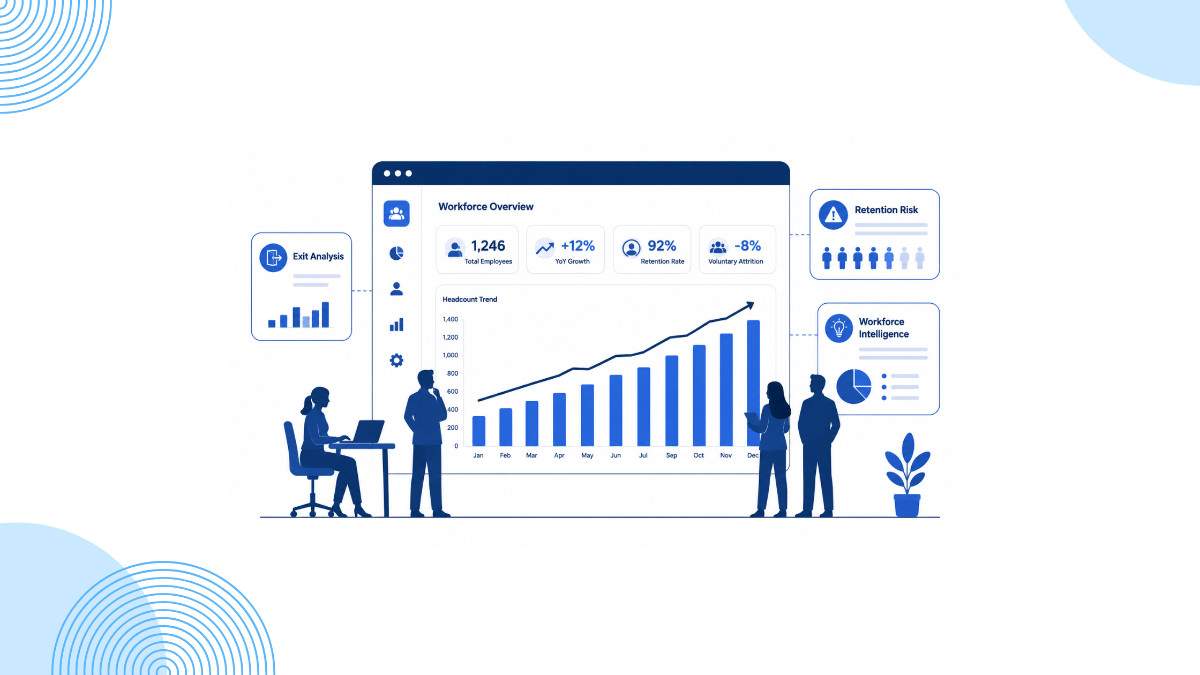
That constraint is changing. An exit interview platform built around sentiment intelligence does not just collect responses. It reads them systematically, surfaces the red flags and green signals buried in natural conversation, and delivers a structured report that tells leadership exactly where to focus and why.
The difference between a basic exit form and a purpose-built exit interview platform comes down to this: one collects data, the other understands it. One produces an archive. The other produces a decision.
For corporate organizations running dozens or hundreds of exits each year, the platform layer is what makes this intelligence scalable. Every conversation feeds the pattern map. Every quarter of data makes the insights more specific. And the gap between what leadership knows and what is actually happening inside the workforce gets smaller with each analysis cycle.
The organizations moving earliest on this are not doing so because they have more resources. They are doing so because they understand that the conversations are already happening inside their organization every quarter, and the only real question is whether anyone is listening at the depth those conversations deserve.
Frequently Asked Questions
A deeper exit interview analysis goes beyond the stated resignation reason to surface the emotional journey that led to the departure. It reveals recurring concerns about leadership, communication, recognition, and growth that employees consistently mention but rarely frame as the primary cause. When these themes are tracked across multiple exits, they form an organizational pattern that points directly to the conditions driving attrition and what leadership needs to change.
An exit interview sentiment report is a structured intelligence output generated from analyzing what departing employees say during their exit conversations. It categorizes the emotional signals in those conversations into risk areas, such as leadership trust, communication gaps, and growth visibility, and positive areas, such as peer relationships, role clarity, and manager support. The report gives leadership a precise, pattern-based picture of what is working and what is not inside the organization, drawn from what employees actually said rather than what HR assumed.
A standard exit summary documents the individual employee’s stated reason for leaving and is typically archived after offboarding. An exit interview sentiment report aggregates language patterns, emotional signals, and recurring themes across multiple exits over time. It does not describe one person’s departure. It describes the organizational conditions that are consistently influencing departures, giving leadership actionable intelligence rather than a record of what happened.
The most common red flags include declining trust in direct management, lack of career growth clarity, inconsistent communication from leadership, feelings of being underrecognized, psychological safety concerns within specific teams, and a disconnect between company values and lived experience. These signals rarely appear in a single interview as a headline reason. They surface as recurring themes across many conversations, which is why collective analysis is essential.
Former employees continue shaping the organization’s reputation and culture long after they leave. Internally, the concerns that drove their departure often persist and affect the colleagues they worked with. Externally, they share their experience through professional networks, employer review platforms, and industry conversations. Organizations that analyze exit sentiment through structured employee exit analysis and act on what it reveals can interrupt both of these effects before they compound into a broader retention and branding challenge.





Let’s discuss the idea
Join hundreds of companies transforming their corporate communities with Almashines