Employee Exit Analysis: Why HR Compliance Is Only the Beginning
Learn why employee exit analysis goes beyond HR compliance and helps organizations reduce attrition and build retention advantage.

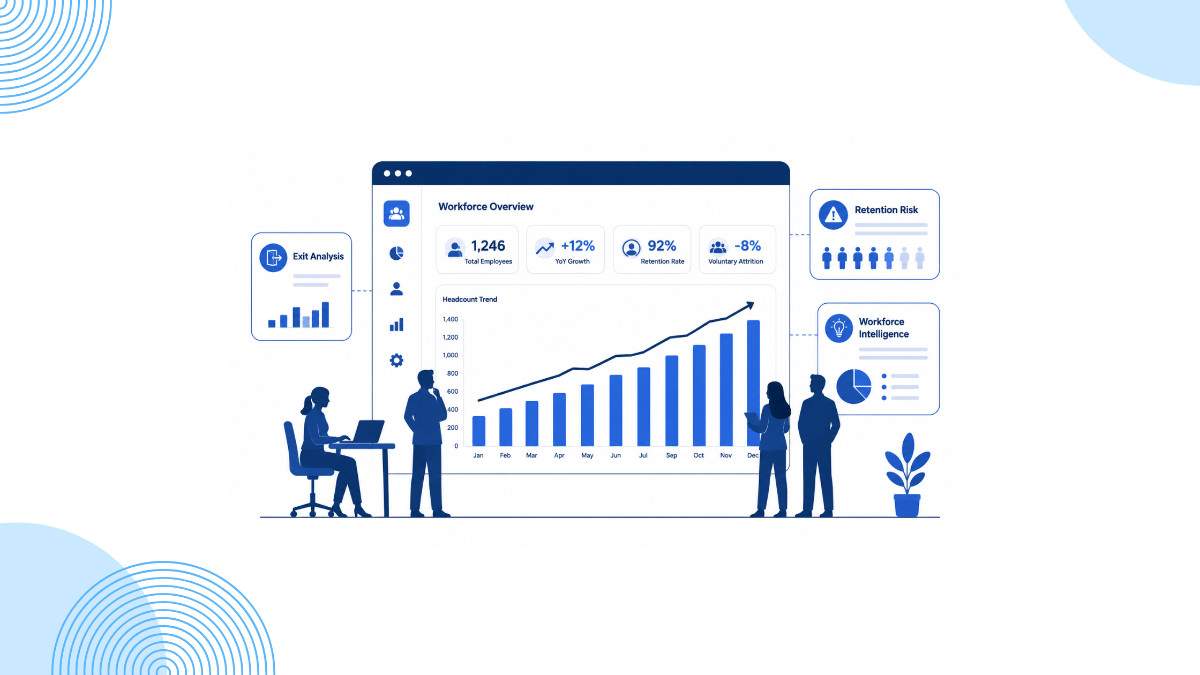
Every year, companies invest significant resources into hiring, onboarding, and developing talent. And every year, the same companies watch a portion of that talent walk out the door, often without fully understanding why.
Exit interviews are supposed to solve this. In practice, they rarely do.
Most organizations have an exit interview process. What they do not have is an exit intelligence strategy. The distinction matters more than most HR leaders realize and it is increasingly separating organizations that retain top talent from those permanently stuck replacing it.
The Compliance Trap Most Organizations Are Stuck In
In most companies, an employee’s final weeks follow a predictable script. Forms are signed, access is revoked, an exit interview is scheduled, and a summary is filed. The process is completed. The box is ticked. The employee leaves.
This approach treats employee exits as administrative closure. It answers one narrow question: why did this person leave? And then archives the response somewhere it will rarely be revisited.
That framing is the problem.
Resignations are almost never caused by a single, isolated reason. By the time an employee submits their notice, months of compounding experiences have already shaped their decision. Those experiences contain information about your organization that no annual engagement survey or performance dashboard will surface.
The challenge is not collecting exit feedback. The challenge is understanding the deeper organizational intelligence hidden inside it and acting on what it reveals before the next resignation happens.
What Your Exit Data Is Actually Telling You
Employee exits, when analyzed collectively rather than individually, almost always reveal patterns. Not just reasons. Patterns.
A single departure can represent a personal circumstance. But when three people from the same team leave within six months, all citing different surface-level reasons, the real signal is not the individual explanations. The real signal is the organizational pattern connecting them.
According to Gallup’s State of the Global Workplace research, over half of voluntarily departing employees say no one asked them how they were doing in the months before they left. The data was always accessible. The organization simply was not collecting it meaningfully.
These patterns typically cluster around five recurring themes:
Leadership Perception Gaps
Employees frequently exit because of unspoken trust erosion with direct managers or senior leadership, not because they dislike the company itself.
Career Visibility Deficits
When growth pathways are unclear or feel inaccessible, high-performing employees disengage quietly, often long before they begin actively job searching.
Communication Breakdowns
Inconsistent communication across hierarchies breeds uncertainty, misalignment, and eventually disengagement that shows up in exit data as “better opportunity.”
Team Trust Deterioration
Psychological safety within teams directly influences retention. When it weakens, exits follow, but the exit interview rarely captures this as the true cause.
Recognition and Contribution Gaps
Employees who feel their contributions are invisible begin disengaging emotionally. It is a slow process that traditional HR metrics rarely detect early enough to intervene.
Individually, each of these concerns may appear manageable. Collectively, they represent workforce sentiment shifts quietly undermining organizational stability. This is precisely why leading corporate organizations are moving beyond documentation-first HR processes.
The Sentiment Gap No Dashboard Is Capturing
Here is the reality most organizations are not comfortable acknowledging: employee dissatisfaction typically begins building months before a resignation letter is submitted.
During that period, productivity metrics may remain stable. Attendance is normal. On paper, the organization looks healthy. But underneath those visible numbers, something else is happening. Trust is eroding. Motivation is declining. Emotional connection to the work and to the organization is quietly fading.
This is what workforce researchers describe as the sentiment gap: the space between how organizations measure employee health and how employees actually experience it.
The organizations closing this gap are not doing so by adding more surveys. They are doing it by treating exit analysis as a continuous workforce intelligence function rather than a one-time HR formality.
The Shift from Exit Documentation to Workforce Intelligence
Forward-thinking organizations have fundamentally changed how they approach employee exits. The shift is not a minor operational adjustment. It is a strategic reframe of what exit data is for.
Instead of asking: “How do we document this departure?” they are asking: “What is this departure telling us about the organization?”
This involves analyzing exit feedback for recurring emotional language patterns, tracking sentiment trends across departments and time periods, identifying which leadership behaviors appear repeatedly in exit concerns, and mapping communication themes that surface across unrelated exits.
This distinction shifts exit analysis from a retrospective HR task to a forward-looking organizational risk function. And it changes the kinds of conversations that happen in leadership rooms.
See workforce intelligence in action
Discover how AlmaShines helps corporate organizations transform employee and alumni data into actionable retention strategy.
Request a Free DemoHow Workforce Intelligence Changes Leadership Decisions
When organizations begin treating exit data as a strategic intelligence source, leadership decision-making becomes less reactive and more proactive.
Instead of responding to attrition after it has already become an operational problem, leaders can identify which teams show early signs of trust erosion, which communication patterns are correlating with higher exit rates, and which management behaviors appear consistently in the exit feedback of high performers.
This creates meaningful opportunities. Not just to retain individual employees but to address the structural and cultural conditions making retention difficult in the first place.
Better communication strategies. Clearer growth visibility. Stronger leadership alignment. Healthier team environments. These outcomes do not happen through policy updates alone. They happen when leaders have the workforce intelligence to understand what is actually driving behavior inside their organizations. Solutions built for corporate talent networks are increasingly designed around exactly this kind of intelligence layer.
Exit Analysis Is Also an Employer Branding Function
There is one more dimension of employee exits that organizations consistently underestimate: the long tail of reputation impact.
Former employees do not stop influencing your employer brand when they leave. They continue shaping your organizational reputation through professional networks, industry communities, referral conversations, and employer review platforms, sometimes for years after their departure.
This means the workforce experience you fail to understand is not only costing you in retention. It is also costing you in talent attraction, brand credibility, and long-term organizational trust.
Organizations that analyze exit feedback strategically and respond to what it reveals build a visible commitment to employee experience. That commitment compounds over time into a meaningful competitive advantage in talent markets.
What This Means for Your Organization
The business case for workforce intelligence has never been stronger. Talent markets are increasingly competitive. The cost of attrition in productivity, institutional knowledge, hiring, and employer reputation continues to grow. And employee expectations around transparency, growth, and organizational culture have permanently shifted.
The organizations that will maintain retention stability over the next decade are not necessarily those that pay more or hire faster. They are the ones that understand their workforce more deeply and act on that understanding earlier.
Employee exits are not the end of an organizational story. They are one of the clearest windows into what that story has been and what it needs to become.
The organizations reading that window strategically are already building the kind of workforce environments that make exits less frequent, less costly, and less disruptive. The organizations that are not are still filing forms and wondering why the same problems keep repeating.
The choice between those two paths begins with how seriously you take what departing employees are trying to tell you.
Frequently Asked Questions
Strategic exit analysis goes beyond documenting why a single employee resigned. It involves identifying recurring patterns across multiple exits by tracking themes in leadership perception, communication breakdown, emotional disengagement, and team trust over time. The goal is to convert exit feedback into actionable workforce intelligence that informs leadership decisions before attrition escalates into an operational disruption.
Traditional exit interviews fail primarily because they analyze feedback in isolation rather than collectively. They focus on documentation instead of pattern detection and lack the systematic analysis needed to surface recurring organizational themes. They answer “why did this individual leave?” but rarely reveal “what organizational dynamics are driving repeated exits?” Without collective analysis across time and teams, companies continue losing talent without addressing root causes.
Employee disengagement typically begins building months before a formal resignation. During this window, performance metrics may appear stable while underlying workforce sentiment is quietly deteriorating. This gap between visible performance indicators and internal emotional experience is precisely why proactive exit analysis rather than retrospective documentation is critical for early retention intervention.
When analyzed collectively, exit interviews consistently surface patterns around leadership accessibility and trust, career growth visibility, team psychological safety, communication quality across hierarchies, and recognition gaps. These themes tend to recur across multiple exits within the same department or time period and indicate deeper organizational friction that will continue driving attrition if the underlying conditions remain unchanged.
Former employees continue influencing employer reputation through professional networks, referrals, and review platforms well after their departure. Organizations that fail to address recurring workforce concerns create a compounding reputation risk, not just in retention, but in talent attraction and employer credibility. Proactive exit analysis and visible organizational responsiveness build the kind of employer trust that becomes a long-term competitive advantage in talent markets.





Let’s discuss the idea
Join hundreds of companies transforming their corporate communities with Almashines