Ex employee Sentiment Analysis by AlmaShines
Easily track ex employee sentiment, strengthen employer branding, and unlock rehire opportunities with AlmaShines.


Relationships do not end when employees exit an organization; they evolve. Even after leaving, former employee continue to carry the organization’s brand, culture, and reputation with them. Their experiences influence employer branding, talent attraction, and long-term perception in the job market.
Recognizing this, AlmaShines introduces Ex-Employee Sentiment Analysis, a feature designed to help organizations systematically understand ex-employee experiences, emotions, and engagement over time. Rather than relying solely on static exit interviews, this approach enables organizations to capture evolving sentiment at scale.
What Is Ex-Employee Sentiment Analysis?
Ex-Employee Sentiment Analysis is a structured mechanism that allows organizations to continuously track and analyze how past employee feel after exiting the organization. Instead of capturing feedback at a single exit point, it monitors sentiment through multiple indicators over an extended period.
Typically, this analysis brings together insights such as:
- ex-employee experience ratings
- reasons for exit
- willingness to rejoin
- likelihood of recommending the organization
- post-exit engagement activity
All these insights are organized within a centralized ex-employee ecosystem, enabling long-term visibility into sentiment trends.
How Ex-Employee Sentiment Analysis Works
To understand how this feature functions, consider an example of a typical sentiment report.
In one scenario, 8,000 ex-employees are onboarded into the ambassadors ecosystem. The system aggregates their responses and engagement data to generate structured sentiment insights.
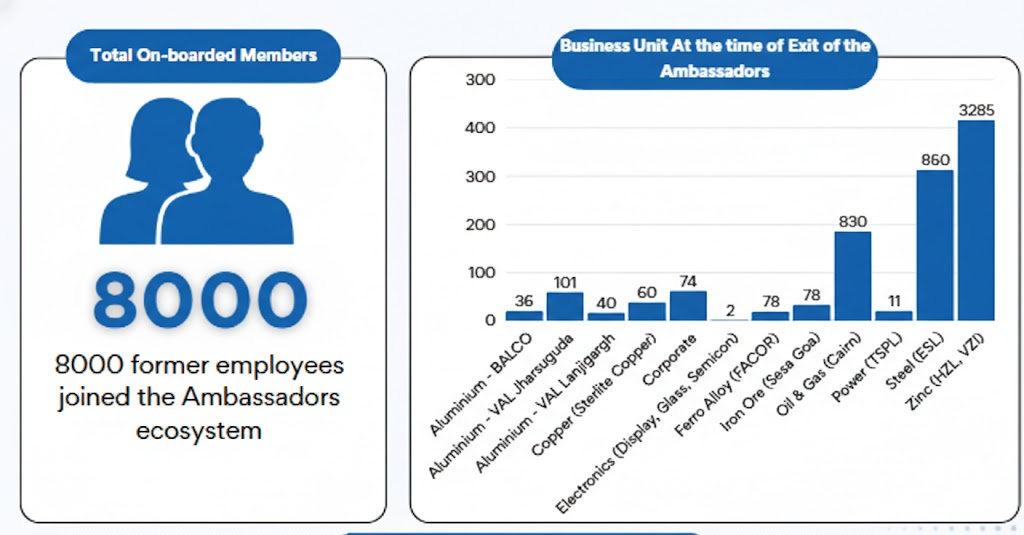
Such a report helps organizations understand:
- the overall strength of ex-employee relationships
- participation trends across business units
- long-term engagement and sentiment patterns
These figures demonstrate how large ex-employee datasets can be meaningfully analyzed .
Understanding Reasons for Exit Through Sentiment Data
Sentiment analysis captures the actual reasons behind employee exits. In a sample report, exit reasons may be distributed as follows:
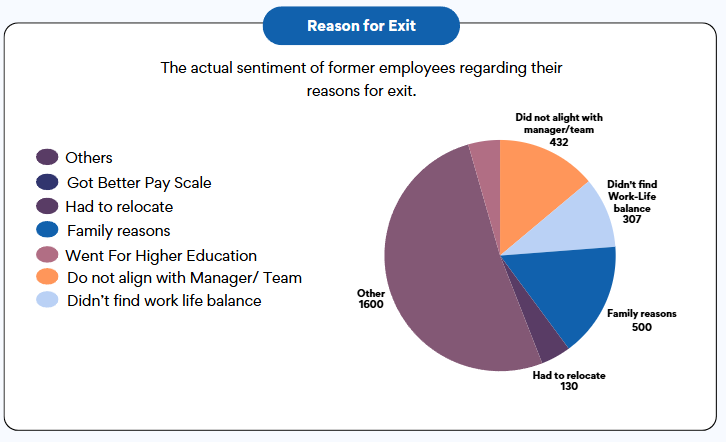
Collectively, these insights help organizations:
- distinguish growth-related exits from internal challenges
- identify recurring patterns across teams
- make informed people and policy decisions
This demonstrates how sentiment data supports strategic workforce planning.
Measuring Ex-Employee Experience After Exit
In a typical scenario, past staff may be asked to rate their overall experience with the organization.
For example, In this example, 890 ex-employees rate their experience as “Awesome” or “Very Good.
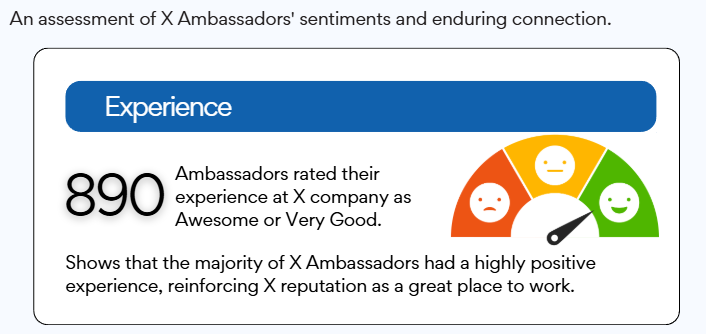
This reflects:
- positive organizational culture
- healthy leadership practices
- meaningful employee experiences
These ratings can be tracked and compared over time.
Rejoining Willingness and Boomerang Hiring Opportunities
Rejoining intent is another key indicator captured through sentiment analysis.
In this scenario, 700 ambassadors indicate a higher likelihood of recommending the organization and openness to rejoining if suitable roles become available.
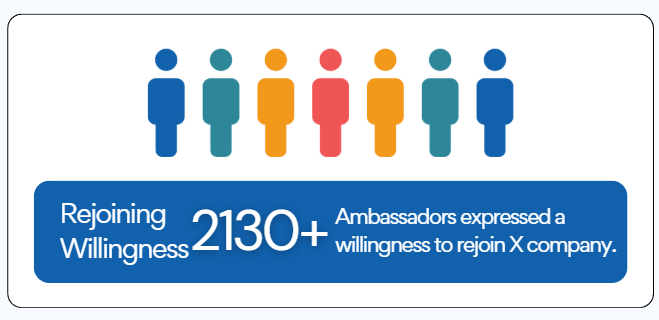
This allows organizations to:
- identify boomerang hiring opportunities
- reduce recruitment timelines
- rehire culturally aligned talent
Without structured analysis, such intent often remains unnoticed.
Ex employee Engagement & Recommendations
Engagement metrics and recommendation likelihood together strengthen sentiment analysis by highlighting how ex-employees perceive and advocate for the organization. In a sample scenario, 700 ambassadors indicate a higher likelihood of recommending the organization to new candidates, while 4,200+ active ambassadors continue engaging on the platform through interactions, discussions, and participation. This combined insight helps organizations understand advocacy strength and long-term connection.
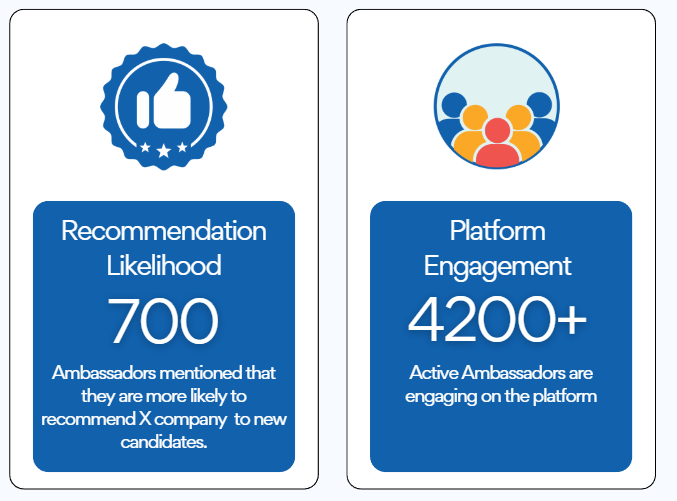
This example reflects:
- strong employer brand credibility
- emotional goodwill among former employees
- ongoing platform engagement and trust
- potential for ambassador-driven referrals and advocacy
Combining Sentiment Data With Real Ex-Employee Voices
Beyond numbers, sentiment analysis includes qualitative feedback from ex-employees across functions such as HR, finance, operations, engineering, and marketing.
These insights often highlight mentorship, learning exposure, responsibility, and career development adding depth to sentiment analysis.
Why Ex-Employee Sentiment Analysis Matters for Organizations
Without a structured system, ex-employee sentiment remains scattered. AlmaShines’ Ex-Employee Sentiment Analysis enables organizations to:
- centralize ex-employee information
- monitor sentiment continuously
- generate actionable insights
- strengthen employer branding
It transforms ex-employee engagement into a strategic advantage.
Trusted by Leading Organizations
Organizations across industries trust AlmaShines to support their long-term people and engagement initiatives. Leading names such as Vedanta, HDFC ERGO, Amazon, DCM Shriram, Reliance, and Kotak Education Foundation (CSR initiatives) have partnered with AlmaShines to manage engagement, insights, and relationships beyond the employee lifecycle.
This trust reflects AlmaShines’ ability to scale across diverse organizational needs while supporting employer branding, engagement continuity, and data-driven decision-making.
Conclusion
Ex-Employee Sentiment Analysis, as introduced by AlmaShines, helps organizations understand the evolving perceptions of ex-employees even after exit.
By transforming sentiment data into actionable insights, organizations can build lasting relationships, enhance employer branding, and unlock future recruitment opportunities.
Frequently Asked Questions (FAQs)
Ex-Employee Sentiment Analysis by AlmaShines is a structured approach to track and understand how former employees feel about an organization post-exit, including their experiences, engagement, and likelihood to rejoin or recommend the company.
Monitoring ex-employee sentiment helps strengthen employer branding, identify boomerang hiring opportunities, maintain long-term alumni relationships, and make informed HR and policy decisions.
AlmaShines collects quantitative data like experience ratings, reasons for exit, willingness to rejoin, and engagement activity, along with qualitative testimonials, to provide actionable insights and identify trends over time.
By tracking rejoining willingness and recommendation likelihood, organizations can identify potential boomerang hires, reduce recruitment timelines, and rehire culturally aligned talent efficiently.
Continuous engagement tracking reveals evolving ex-employee sentiment, highlights active alumni advocates, and provides insights for HR and leadership to make data-driven decisions for long-term organizational benefit.





Let’s discuss the idea
Join hundreds of companies transforming their corporate communities with Almashines